

Meniscus Root Tears
What Is a Meniscus Root Tear?
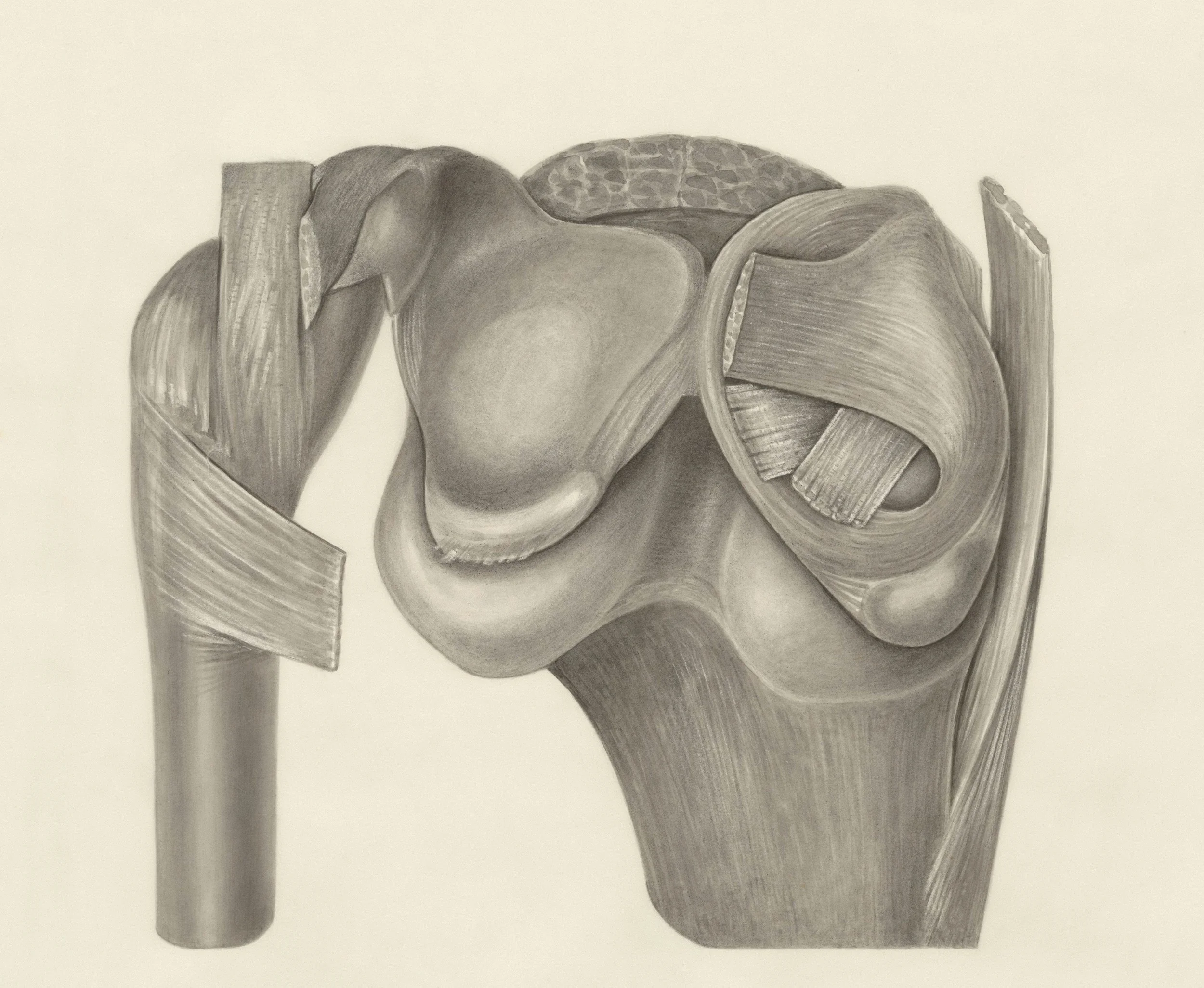
A meniscus root tear is a specific type of knee injury that occurs where the meniscus attaches to the bone (tibia). These attachment points, called “roots”, are critical for keeping the meniscus stable and functioning properly.
When the root is torn or detached, the meniscus can no longer absorb shock effectively. In many cases, this causes the knee to function as if the meniscus is no longer there at all.
Because of this, meniscus root tears are considered serious injuries that can accelerate joint damage if left untreated.
Why the Meniscus Root Is So Important
The meniscus acts as a cushion between the bones of the knee. The roots anchor it in place so it can distribute load evenly.
When a root tear occurs:
The meniscus can shift out of position (extrusion)
The knee experiences increased pressure
Cartilage begins to wear down more quickly
In fact, studies show that a root tear can significantly increase stress within the knee joint and contribute to early osteoarthritis.
Causes of Meniscus Root Tears
Meniscus root tears can happen in two main ways:
1. Traumatic Injury
Sudden twisting or pivoting movement
Common in athletes
Often associated with ACL injuries
More common in younger patients
2. Degenerative (Wear-and-Tear)
Occurs over time as the meniscus weakens
More common in patients over 40
Can happen during simple activities (e.g., stepping off a curb)
Often affects the medial (inner) meniscus
Meniscus root tears are sometimes missed because patients may still be able to walk.
However, without treatment:
Knee joint pressure increases significantly
Cartilage damage accelerates
Risk of early osteoarthritis rises
Early diagnosis allows for better treatment options and improved long-term outcomes.
Recovery from meniscus root repair is more involved than standard meniscus surgery:
Limited or no weight-bearing for several weeks
Gradual return to motion and strength
Physical therapy is essential
Full recovery may take several months
Many patients can return to normal activity with proper rehabilitation.
Common Symptoms
Patients with a meniscus root tear may experience:
Pain deep in the knee, often toward the back
Swelling and stiffness
A popping sensation at the time of injury
Difficulty squatting or bending the knee
Feeling like the knee may “give out”
Reduced ability to bear weight
Symptoms may improve slightly after the initial injury, but underlying damage often remains.
Why Early Diagnosis Matters

Recovery After Root Repair
To learn more about meniscus tears, treatment options, and how meniscus tears are diagnosed, check out our “For Patients” page:
References
LaPrade RF, Ho CP, James E, Crespo B, LaPrade CM, Matheny LM.
Meniscal Root Tears: A Classification System Based on Tear Morphology.
The American Journal of Sports Medicine. 2015.Bhatia S, LaPrade CM, Ellman MB, LaPrade RF.
Meniscal Root Tears: Significance, Diagnosis, and Treatment.
The American Journal of Sports Medicine. 2014.Allaire R, Muriuki M, Gilbertson L, Harner CD.
Biomechanical Consequences of a Tear of the Posterior Root of the Medial Meniscus.
Journal of Bone and Joint Surgery. 2008.Faucett SC, Geisler BP, Chahla J, et al.
Meniscus Root Repair vs Meniscectomy or Nonoperative Management: Clinical Outcomes.
The American Journal of Sports Medicine. 2019.Feucht MJ, Kühle J, Bode G, et al.
Rehabilitation After Meniscus Root Repair: A Systematic Review.
Knee Surgery, Sports Traumatology, Arthroscopy. 2015.Chung KS, Ha JK, Yeom CH, et al.
Pullout Fixation for Posterior Medial Meniscus Root Tears: Clinical Results.
Arthroscopy. 2015.American Academy of Orthopaedic Surgeons.
Meniscus Tears.
https://orthoinfo.aaos.org/Mayo Clinic.
Meniscus Tear – Symptoms and Causes.
https://www.mayoclinic.org/Cleveland Clinic.
Meniscus Tears.
https://my.clevelandclinic.org/